

Key Takeaways
- Define whether the project covers rack supply, physical installation, infrastructure coordination or a combination, so responsibilities are clear before deployment.
- For data center rack installation Malaysia, coordinate rack layout with power, cooling, cabling, containment and access requirements.
- Match the installation approach to the project context: a new build, capacity expansion or work in an operational facility each has distinct coordination and access needs.
- Use a staged readiness process to identify site dependencies before installation and verify completion against project-defined handover requirements.
- Consider DCS Smart Racks and modular containment as part of a deployment plan shaped around facility conditions and operational continuity.
What Data Center Rack Installation in Malaysia Covers Beyond Positioning Cabinets
Data center rack installation in Malaysia covers the project-scoped work of positioning and integrating rack infrastructure within a facility. The approved design, equipment plan and operational requirements determine the scope. Work may include rack supply and physical placement, as well as coordination with the power, cooling and cabling systems serving the equipment.
These are distinct responsibilities. One package may supply the rack, another may handle placement, and separate teams may connect adjacent facility systems. Define the interfaces early. A cabinet being in position doesn’t confirm that power distribution, structured cabling routes or cooling arrangements are ready for equipment deployment.
The following video illustrates a network rack setup. Use it as a visual reference, not as a substitute for project-specific facility drawings and installation requirements.
What work may sit within a rack installation scope?
Depending on the project, the scope may cover delivery to the designated area, placement to the approved layout, alignment and securing. It should also explain how work coordinates with power distribution, structured cabling and cooling interfaces, including the routes and access needed around each rack. Clear responsibility boundaries make dependencies visible before work starts.
Keep the scope precise. General building construction and IT configuration, such as configuring servers or network devices, are separate activities unless expressly included in the project. DCS supplies and implements DCS Smart Racks as part of its mission-critical infrastructure offering.
Which facility and rack factors shape the scope?
Start with the approved equipment plan and facility documentation. Rack dimensions, intended equipment arrangement, floor layout and project-defined loading information all affect where racks can be placed and how installation should be coordinated. The familiar 19-inch rack standard describes a common equipment-mounting format, but it doesn’t define every cabinet’s external dimensions or the needs of a specific deployment.
Raised access floors add another planning interface. Underfloor routes and access points can affect how power and cabling reach the rack area. Check that routes, floor access and the proposed work sequence align with the approved layout. The final scope should reflect the facility and equipment documentation, deployment phase and operational constraints rather than assume one arrangement fits every site.
How Rack Installation Connects with Power, Cooling, Cabling and Containment
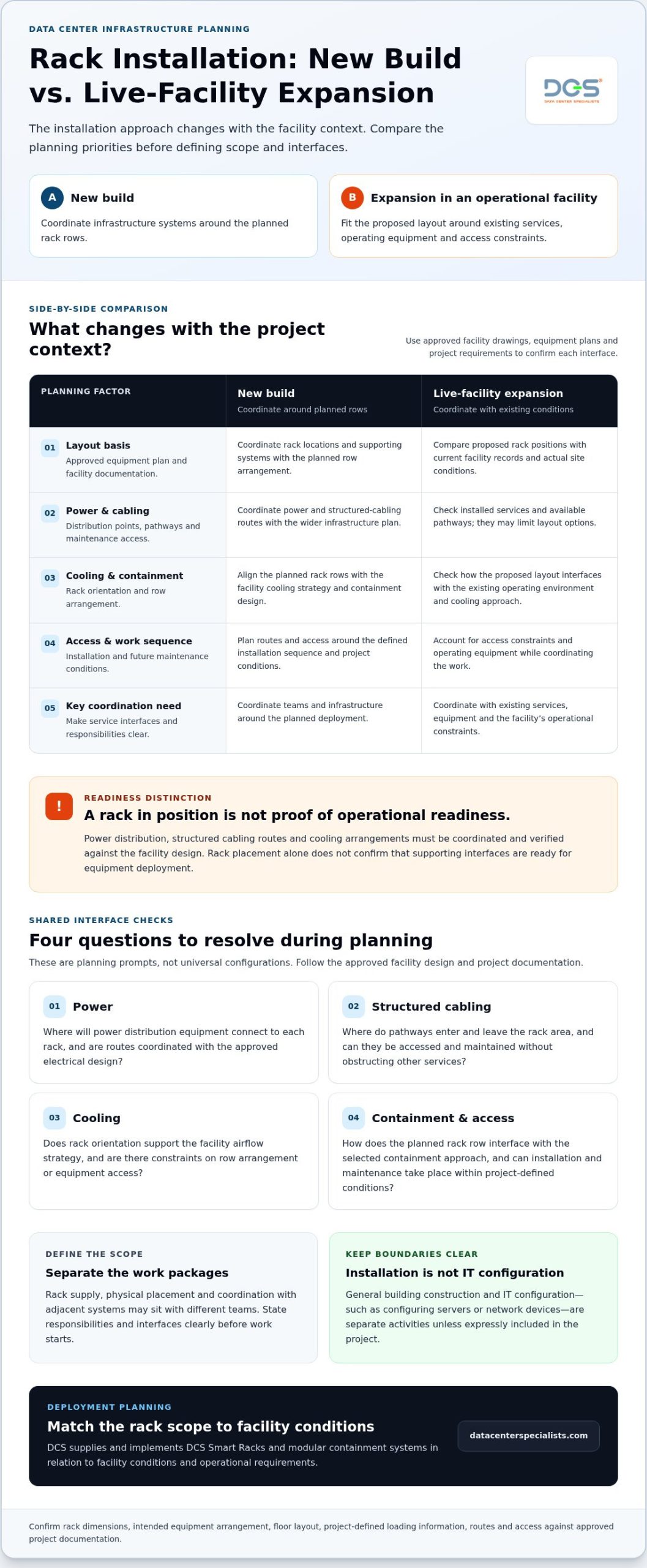
A rack layout is an interface plan, not just a set of cabinet positions. It must align with power distribution, structured cabling, cooling strategy and the routes people need to install and maintain equipment. In a new deployment, teams can coordinate these systems around the planned rows. In an expansion, the layout must also work with existing services, operating equipment and access constraints.
Rack placement alone does not establish operational readiness: the supporting power, cooling and cabling interfaces must be coordinated and verified against the facility design.
Use these questions to make key interfaces visible during planning:
- Power: Where will power distribution equipment connect to each rack, and are routes coordinated with the approved electrical design?
- Structured cabling: Where do cable pathways enter and leave the rack area, and can they be accessed and maintained without obstructing other services?
- Cooling: Does rack orientation support the facility’s airflow strategy, and are there constraints on row arrangement or equipment access?
- Containment: Does the design use hot-aisle or cold-aisle containment, or another approach, and how does it interface with the planned rack rows?
- Access: Can installation and future maintenance take place within the space and work conditions defined for the project?
These are planning prompts, not universal configurations. Cable routes, power arrangements and clearances should follow the approved facility design and project documentation. The Telecommunications Industry Association’s overview of TIA-942 data center standards provides broader context for data center infrastructure planning. Apply project requirements through the relevant design documentation.
Power and structured cabling at rack level
Coordinate rack locations with the intended power distribution points and planned cable routes before finalizing the layout. Check where services approach each rack, how cables will be accessed, and whether the arrangement allows orderly maintenance. For teams planning their network infrastructure, explore Structured Wiring solutions to see how professional cabling architecture supports clean, maintainable hardware environments. In a new build, routes can be coordinated with the wider infrastructure plan. In an existing hall, installed services and available pathways may limit options, so compare the proposed layout with current facility records and site conditions. Use project documentation to confirm capacity and configuration.
Cooling and modular containment interfaces
Rack orientation and row arrangement affect how the layout relates to the facility’s cooling strategy. Hot-aisle and cold-aisle containment are possible approaches, not requirements for every data hall. Suitability depends on the design and operational context. Where a project includes containment, plan how it integrates with rack rows while preserving the required access. Explore DCS modular containment alongside rack planning. Where teams also want visibility of conditions close to the equipment, smart rack environment monitoring can add rack-level detail to room-level readings.
Compare Rack Installation Approaches for New Builds, Expansions and Live Facilities
Rack installation varies by facility and project phase. A new build can sequence rack work within a wider construction and commissioning programme. An expansion must connect new capacity to existing layouts and services. Work in an operational data center must also account for site controls and ongoing activity. For data center rack installation Malaysia, shape the delivery plan around facility status, approved documentation and operational constraints instead of assuming one method fits every project.
| Planning factor | New build | Capacity expansion | Operational facility |
|---|---|---|---|
| Coordination needs | Sequence rack placement with construction, infrastructure installation and project handovers. | Align new positions and interfaces with existing layouts and service routes. | Coordinate work with facility operations and the site’s change-control process. |
| Access constraints | Plan delivery and placement around construction access and work sequencing. | Consider routes through occupied areas and proximity to existing equipment. | Follow site access rules and protect operating areas during work. |
| Key dependencies | Approved drawings, equipment plans and clear interface responsibilities. | Current facility records, confirmed available space and service coordination. | Approved work plans, operating procedures and defined coordination with site teams. |
| Operational considerations | Coordinate installation milestones with project readiness and handover. | Manage interaction between new and existing capacity. | Plan tasks to suit operational controls; do not assume work will be disruption-free. |
New-build rack deployment versus capacity expansion
In a new build, rack areas are one part of a broader programme. Use approved drawings to coordinate installation sequencing with construction, power, cooling and cabling activities, and to define interface responsibilities. An expansion starts from a different position: existing racks, pathways and facility arrangements shape where and how new capacity can be integrated. Compare both approaches using the same inputs, including approved layouts, equipment plans and responsibility boundaries.
Installing racks within an operational data center
Live-facility work requires operational coordination. Address access routes, work areas and interactions with nearby equipment in a site-specific plan. Align the sequence with the facility’s change controls and operating procedures, and define how installation teams will coordinate with site operations. The plan should set clear working boundaries and dependencies without assuming an outage-free method or fixed duration.
Use this comparison to define scope before scheduling work. A delivery plan that reflects facility status helps teams identify coordination needs early and manage the transition from rack placement to project-defined handover.
Rack Installation Readiness: Layout, Site Conditions and Handover Checks
A structured readiness process helps prevent assumptions from turning into installation delays or handover gaps. For data center rack installation Malaysia, agree the scope, drawings, responsibilities and acceptance criteria before work begins. Then review site conditions, coordinate interfaces, verify completed work and document the handover.
Pre-installation information and site coordination
Begin with the approved rack layout and equipment plans. Check that planned positions match facility documentation, then review delivery routes, access to the work area and relevant site conditions. Confirm how installation connects with adjacent power, cabling and cooling work, and identify the project parties responsible for each interface.
Coordinate access arrangements and operational controls with facility stakeholders, particularly near occupied or operating areas. Record unresolved dependencies, such as incomplete route information or an open interface decision, and assign responsibility for resolving them before the affected work proceeds.
- Confirm scope: Record what the installation includes and where related work begins or ends.
- Review site readiness: Check the approved layout, equipment information, access route and relevant site conditions.
- Coordinate work: Agree access, work boundaries, responsibilities and applicable operational controls with the facility team.
- Resolve dependencies: Track open items and determine their impact on the planned sequence before installation activities proceed.
Installation verification and operational handover
After placement, verify the work against the project’s approved documents and acceptance criteria. Project-defined checks may include rack position and alignment, agreed installation interfaces and confirmation that specified work is complete. Keep verification specific to the actual scope rather than applying an assumed universal checklist.
Assign an owner to review each handover item and identify who provides acceptance under the project plan. Record exceptions and outstanding actions, including the responsible party and agreed next step. Handover should document the agreed installation scope, completed checks and outstanding items against the project’s acceptance criteria.
Where the project includes DCS Smart Racks, align the installation records with the agreed rack scope and facility interfaces. For ongoing facility planning, DCS’s data center preventive maintenance services can support consideration of operational requirements beyond installation. Define handover expectations early so the facility team receives a clear record for operational use.
Plan a Data Center Rack Installation in Malaysia with DCS
A reliable rack deployment starts with a clearly defined scope and a coordinated view of the facility. Confirm what the installation includes, how racks interface with power, cabling and cooling, and whether the project is a new build, an expansion or work in an operational environment. Then align site readiness, responsibilities and handover criteria with the project documentation.
DCS supplies and implements DCS Smart Racks and modular containment systems as part of its mission-critical infrastructure work. Consider these options when they support the facility layout, airflow strategy and operational requirements. Evaluate them against the approved design and adjacent systems, rather than selecting rack and containment elements in isolation.
When DCS Smart Racks and containment belong in the discussion
Rack and containment planning are closely related: row arrangement and rack position affect how a containment approach fits the space and the facility’s cooling strategy. Hot-aisle or cold-aisle containment may suit a project when it aligns with the design and operating requirements. Review DCS containment systems alongside rack planning to consider how these infrastructure elements work together.
For a buyer’s review, compare the proposed rack solution with the approved equipment plan, installation boundaries, facility interfaces and handover expectations. Focus on project fit and documented requirements, rather than assumptions about specifications that haven’t been established for the deployment.
Define the next step for your Malaysia project
Before a technical discussion, assemble the information that will help clarify scope and dependencies:
- Approved rack layout drawings and equipment plans
- Installation scope boundaries and interface responsibilities
- Known site constraints, access arrangements and operational controls
- Project-defined acceptance and handover requirements
These inputs help frame the rack deployment around the facility’s actual conditions, whether capacity is being added or a new area is being developed. They also give project stakeholders a shared basis for identifying open interfaces and agreeing what completion means.
For data center rack installation Malaysia, DCS provides DCS Smart Racks and modular containment solutions for mission-critical infrastructure projects. Contact DCS to discuss your rack requirements and define a practical technical scope for your facility.
Set Your Rack Project Up for a Reliable Handover
A dependable rack deployment involves more than cabinet placement. Clear scope boundaries, coordinated power, cooling and cabling interfaces, and an approach suited to the facility’s status help teams plan work with fewer assumptions. Readiness checks and project-defined handover criteria provide a shared record of what was installed and accepted.
For data center rack installation Malaysia, start with approved layouts, equipment plans, known site constraints and named interface responsibilities. These inputs help align rack and containment decisions with the facility design and operational requirements, whether the project is a new build, an expansion or work in a live environment.
Data Center Specialists supplies and implements DCS Smart Racks and modular containment systems for mission-critical facilities. Bring your project documentation and requirements into a focused technical discussion. Discuss your data center rack project with DCS to establish a scope grounded in facility readiness and operational needs.
Frequently Asked Questions
What does data center rack installation include?
Data center rack installation may include rack delivery and placement, followed by coordination with relevant facility interfaces. For data center rack installation Malaysia, define the agreed scope using the project brief, equipment plans and site conditions rather than assuming one standard package. Physical rack installation is distinct from configuring servers or network devices, general construction work and ongoing facility operations. Set responsibilities at each interface before installation begins.
How do I choose between enclosed cabinets and open-frame racks?
Choose the format that fits the facility design, equipment requirements, access needs and environmental strategy. Enclosed cabinets and open-frame racks are different options, but neither is automatically right for every deployment. Review the approved technical requirements and planned equipment arrangement, then assess how each format fits the layout and operating conditions. Market categories describe options, but they don’t determine the right rack for an individual facility.
Can racks be installed in an operational data center?
Yes. Rack work can be planned within an operational data center, but the method must account for site access, work boundaries, operational controls and nearby infrastructure. Follow the facility’s approved procedures and project-specific risk controls, and coordinate activities with operations stakeholders. This differs from a new build, where rack installation can be sequenced within the wider project programme. Don’t assume there will be no disruption or that a standard duration applies.
What needs to be ready before data center racks are installed?
Before installation, align the approved rack layout and equipment plans with access arrangements, interface responsibilities and documented site constraints. Coordinate power, cooling, cabling and any containment with the facility design. These are project planning considerations, not a universal regulatory checklist. Resolve relevant dependencies and define acceptance criteria, work boundaries and responsibility for each interface before installation proceeds. This gives the team a clear basis for readiness and completion.
How does rack installation affect cooling and containment?
Rack orientation and row layout can influence how the installation fits the facility’s cooling approach and any planned hot-aisle or cold-aisle containment. The relationship depends on the site design and operating requirements, so coordinate these decisions with the wider infrastructure plan. Containment isn’t necessary for every facility, and its presence alone doesn’t guarantee a particular efficiency outcome. Treat rack and containment planning as connected design decisions, not separate assumptions.
How long does data center rack installation take?
There’s no single duration for every rack installation. The schedule depends on the agreed scope, rack quantities, site access, facility status, interface dependencies and work sequence. A new build may follow the broader project programme, while work in a live facility must also fit access and operational coordination requirements. Set project-specific milestones, work boundaries and handover activities in the installation plan instead of relying on a generic time estimate.
What should a data center rack installation handover document?
Handover documentation should record the agreed scope, completed installation activities, project-defined verification checks, outstanding items and responsible parties. The exact records depend on the contract, project acceptance criteria and facility procedures. Identify who reviews and accepts each item, and make the documentation traceable to the completed work. Don’t assume a single ISO standard prescribes a universal rack handover format. The goal is a clear record for the facility team of what was completed and accepted.