
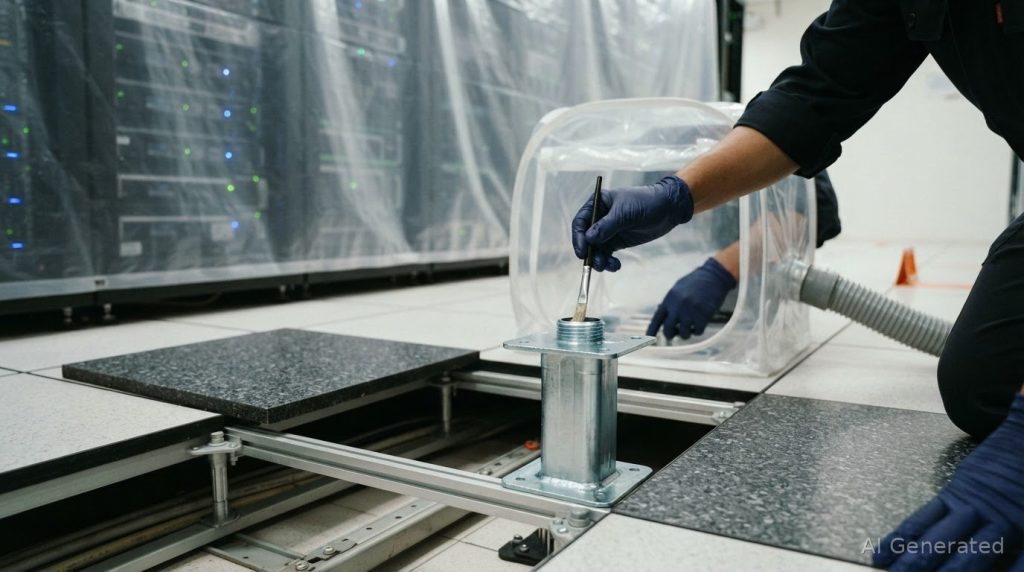
A microscopic zinc filament can become an operational risk when it detaches and travels through data-centre airflow into sensitive equipment. In Malaysia, zinc whisker remediation services typically combine containment, protection of equipment, HEPA-filtered vacuuming, treatment of affected zinc-plated surfaces and an encapsulant coating. The sequence matters: disturbing contaminated surfaces without controlling particles can spread them further.
It’s understandable to focus on equipment failures first. Zinc whiskers are typically about 2 µm in diameter, small enough to be difficult to see, yet they can interfere with electrical circuits if they enter hardware. Remediation is therefore more than removing visible contamination; it requires managing the source and limiting particle movement through the affected area.
This article explains how assessment and containment guide the work, how HEPA-filtered cleaning and equipment protection help limit further spread, and how operational scheduling and encapsulant coatings fit into a remediation plan. You’ll also learn which site conditions shape the approach, so your operations team can plan the intervention around the technical priorities.
Key Takeaways
- Contain the affected area and use HEPA-filtered vacuuming to help limit whisker particles reaching live hardware.
- Protect or relocate equipment and control airflow before disturbing zinc-plated components.
- Plan remediation around operational constraints, coordinating work zones and activities with data centre operations.
- Use careful removal, decontamination and follow-up sampling to assess the work and manage ongoing contamination risk.
- Inspection and remediation costs depend on factors such as contamination extent, affected surfaces and the scope of work.
Containment and HEPA-filtered vacuuming
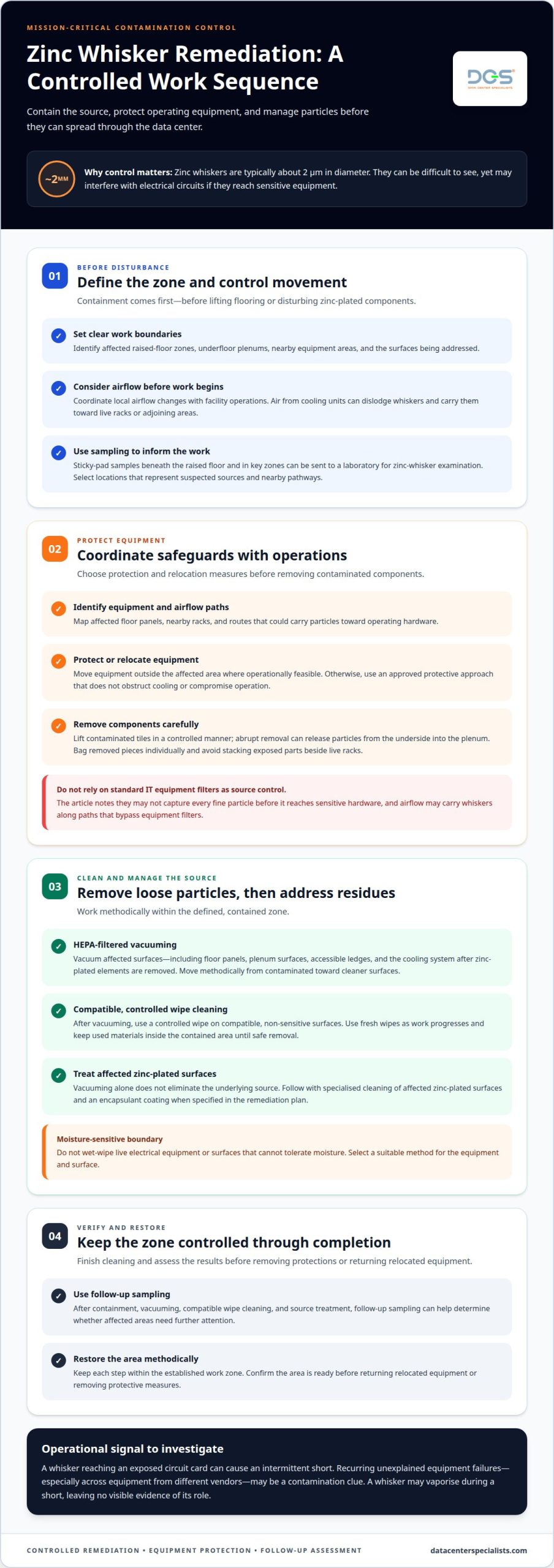
Containment comes before disturbing a suspected zinc-whisker source. Affected raised-floor zones, underfloor plenums and nearby equipment areas should be defined so cleaning activity does not spread particles into adjoining spaces. Zinc whiskers are typically about 2 µm in diameter, making them difficult to spot and easy to overlook during a visual sweep. Treat each identified zone as a controlled work area, with its boundaries and the surfaces being addressed established before removal begins.
Air movement needs consideration before disturbing zinc-plated components. Airflow from computer room air-conditioning units can dislodge whiskers and carry them through the data centre. The work sequence should limit or redirect airflow through the affected area and contain the work zone. For example, when addressing contaminated floor panels, prevent released particles from travelling towards live racks or adjacent open floor areas.
Use a HEPA-filtered vacuum to collect loose particles from affected surfaces, including the air plenum and cooling system after zinc-plated elements are removed. HEPA filtration is designed to retain fine contaminants rather than return them to room air. This matters because a whisker may be too small to see during routine inspection, while a vacuum without suitable filtration could redistribute collected material. Vacuum methodically across the defined zone instead of moving randomly between contaminated and cleaner surfaces.
HEPA vacuuming and wet-wipe cleaning address different residues. Vacuuming removes loose particles from floor panels, plenum surfaces and accessible ledges. A controlled wipe can then collect remaining surface contamination from compatible, non-sensitive surfaces. Use fresh wipes as work progresses, and keep used materials within the contained area until they can be removed safely. Do not use a wet wipe on live electrical equipment or a surface that cannot tolerate moisture; use a suitable method that accounts for the equipment instead.
Cleaning should address the source, not just visible debris. Zinc-whisker-contaminated surfaces can continue releasing particles, so vacuuming alone does not eliminate the underlying risk. If zinc-plated components are removed, handle them carefully and contain each item to limit particle release. Follow with specialised cleaning of affected zinc-plated surfaces and an encapsulant coating when specified in the remediation plan. This sequence combines source management with control of residual contamination.
Sampling can help define the work and assess its results. Sticky-pad samples placed beneath the raised floor and in key zones can be sent to a laboratory for zinc-whisker examination. Choose locations that represent the suspected source and nearby pathways, rather than relying on a single surface. After containment, HEPA vacuuming, compatible wipe cleaning and source treatment, follow-up sampling can help determine whether affected areas need further attention. Keep each step within the established zone until cleaning is complete.
Protecting or relocating equipment during remediation
A zinc whisker reaching an exposed circuit card can cause an intermittent short. Detached particles may travel through cooling airflow, enter equipment and interfere with circuit-board currents, often affecting power supplies. A short circuit can vaporise a whisker, leaving no visible evidence of its role. Treat unexplained, recurring equipment failures as a possible sign of contamination, especially when failures affect equipment from different vendors.
Standard IT equipment filters are not a substitute for controlling the source. They may not capture every fine particle before it reaches sensitive hardware, and airflow can carry whiskers along paths that bypass equipment filters. Before removing zinc-plated flooring or other components, redirect or reduce airflow and contain the affected zone. This limits the chance of disturbing whiskers and carrying them towards operating equipment.
Protection should follow a coordinated sequence with facility operations:
- Define the work zone. Identify affected floor panels, nearby racks and airflow paths before disturbing flooring or plated components.
- Protect or relocate equipment. Move equipment outside the affected area where operationally feasible. Otherwise, use an approved protective approach that does not obstruct cooling or compromise equipment operation.
- Control airflow. Coordinate changes to local air movement before removal begins, then maintain containment during the work.
- Remove components carefully. Bag each removed piece individually to limit particle release and prevent breakage during handling.
- Restore the area methodically. Complete cleaning and confirm the work zone is ready before returning relocated equipment or removing protective measures.
The plating process matters because zinc whiskers can develop on zinc-electroplated raised-floor tiles and bare metal pedestals or stringers. Lifting a contaminated tile abruptly can release particles from its underside into the plenum. A controlled removal sequence protects both equipment and the surrounding flooring system. Keep removed parts contained rather than stacking exposed pieces beside live racks.
When comparing zinc whisker remediation providers in Malaysia, assess whether their documented methods cover airflow control, equipment protection, careful component removal, cleaning, follow-up sampling and reporting. Request clear written warranty terms covering scope, exclusions and responsibilities rather than relying on a general assurance.
For Malaysian sites, review the work plan against applicable occupational safety, environmental waste-handling, and building or facility requirements. The requirements depend on the work scope and site conditions, so coordinate the review with the facility’s responsible personnel before removal begins.
Where the work also requires mission-critical physical cleaning, professional data center cleaning can address contamination across equipment areas and facility surfaces as part of a controlled remediation plan.
Scheduling remediation around data centre operations
Schedule remediation around the affected zone, airflow paths and equipment dependencies, not simply the floor area. For a live Malaysian facility, operations, facilities and remediation teams should agree on work boundaries, access, equipment protection and stop-work conditions before disturbing any panels. This coordination helps keep cleaning activities separate from routine maintenance and prevents overlapping tasks from introducing additional disturbance.
Map the likely source before setting the work sequence. Zinc whiskers can form on the underside of electroplated raised-floor tiles and on bare metal pedestals and stringers. The plating process can produce stresses that push fine filaments outward, while zinc’s corrosion-protection function does not prevent whisker formation. Temperature and humidity do not determine whether this growth continues, so changing environmental settings is not a remediation plan.
Timing should reflect how the suspected contamination was identified. Persistent equipment failures across multiple vendors may point to a shared environmental cause rather than one defective device. A rise in failures after floor work or another physical disturbance is another reason to pause nearby activities and assess the area. Airflow from computer room air-conditioning units can dislodge whiskers, making the timing of panel removal and airflow adjustments operationally important.
A practical schedule sequences the work so teams know what happens before each affected zone is reopened:
- Coordinate operations. Confirm affected rooms, access routes, equipment dependencies and activities that could disturb flooring.
- Assess and sample. Use site assessment and sampling to confirm contamination and map its extent before defining the remediation boundary.
- Prepare the zone. Protect or relocate equipment as needed, then coordinate airflow changes before removing suspected source components.
- Remediate in controlled stages. Align component removal, cleaning and surface treatment with the agreed work area and operating constraints.
- Review before release. Complete follow-up sampling and document the work before treating the affected zone as ready for normal activity.
Cost and duration depend on the extent of contamination, sampling needs, affected flooring or components, equipment-protection requirements, and operational constraints on access and work sequencing. Replacing source materials or extending work to additional zones also changes the scope, while laboratory analysis adds its own turnaround time.
Zinc whiskers typically begin developing four to five years after a data centre is commissioned, but this is not a reliable schedule for intervention. Use observed failures, disturbance history and sampling results to set priorities. If structural floor components or multiple connected zones are implicated, stage the work so remediation, cleaning and operational release remain coordinated.
Containment and cleaning practices
Begin with a documented visual inspection before deciding which floor materials need attention. Shine a light or laser pointer parallel to a raised-floor tile; the low angle can make fine filaments easier to detect. Inspect at least 20 floor panels when assessing whether replacement is needed. Record each panel’s location and condition, so the remediation scope reflects observed evidence rather than assumptions about the entire room.
Use the inspection record to distinguish suspected source materials from adjacent surfaces. Zinc whiskers can occur beneath electroplated floor tiles and on bare metal pedestals or stringers. Marking these locations on a floor plan helps teams identify where a material decision is needed. It can also prevent replacement work from overlooking a nearby component made with the same plating process.
Replacement planning should account for corrosion protection as well as whisker risk. Replacing zinc-electroplated surfaces with materials that are not zinc-electroplated removes that source. Hot-dip galvanized zinc coating provides rust protection without the electroplating stress associated with whisker formation. Powder coating is another corrosion-protection option, but it is less effective than the alternatives described for this application.
Choose the replacement approach based on the facility’s floor-system requirements, structural condition and planned maintenance window. Replacing all flooring at once can help prevent future zinc-whisker occurrences, but requires a coordinated project scope. If full replacement is not immediately possible, thorough decontamination may provide a year or two of planning time before tile replacement. Treat that interval as planning time, not proof that the source has been eliminated.
Keep the cleaning record tied to specific floor locations and materials. For example, note whether a panel was retained, treated or selected for replacement, and identify associated pedestals or stringers. This creates a useful reference for future inspections and facilities work. A location-based record also helps teams avoid treating visibly different flooring as one uniform material group.
When replacement materials are specified, document the coating type and its intended corrosion-protection role in the facility’s maintenance records. A later floor alteration can then be assessed against the original material decision. This is especially useful when work takes place in separate zones over time, as phased upgrades can leave different materials within the flooring system.
Keep the final work scope aligned with inspection findings, selected materials and the operational plan. A panel replacement decision should identify the affected floor area and related components, while a cleaning scope should state which surfaces were addressed. This gives facility teams a clear basis for planning subsequent flooring work without treating cleaning alone as a permanent solution to a source that remains.
How much does zinc whisker inspection and remediation cost in Malaysia?
The cost of zinc whisker remediation services in Malaysia depends on the defined scope, so no single price applies to every facility. A quotation should distinguish inspection from corrective work and state which deliverables are included. This lets facility managers compare proposals based on equivalent work rather than treating different scopes as interchangeable.
Pricing depends on the case and is provided after a quotation request. Cost drivers include the selected remediation method, the labour and specialist equipment required, the number of work stages, and the documentation and verification deliverables specified in the scope.
For a useful estimate, clarify what the inspection report must provide. A basic record of observations differs from a detailed location plan linking findings to specific floor materials and recommended actions. If laboratory analysis is included, it should be identified separately from site inspection and reporting. Clear line items help procurement teams understand which assessment outputs are included before authorising further work.
Corrective-work pricing also depends on the treatment selected. A scope based on cleaning and surface treatment differs from one that includes removing and replacing source materials. If both options are technically appropriate, request separate descriptions of their tasks and intended outcomes. This allows facility teams to compare operational and lifecycle implications without assuming that the lowest initial quotation covers the same work.
A quotation is easier to review when its stages are explicit:
- Inspection deliverables: the areas assessed, observations recorded and report format.
- Testing items: any laboratory analysis or other verification included in the scope.
- Remediation work: the specified cleaning, treatment or material replacement tasks.
- Closeout records: the documentation supplied after the agreed work is complete.
Ask for exclusions to be stated alongside included tasks. For example, a proposal may separate inspection and reporting from corrective work, allowing management to approve the next stage based on recorded findings. This structure also reduces ambiguity if the agreed scope changes after inspection. The quote should explain how additional work is handled, rather than leaving facility teams to infer what the original figure covers.
Compare proposals by matching deliverables, treatment assumptions and closeout documentation. A lower total may reflect a narrower scope, while a broader proposal may include additional assessment or verification tasks. Reviewing these differences gives engineering and procurement teams a sound basis for selecting a scope that fits their facility’s requirements.
For a discussion of the physical cleaning scope within a remediation plan, request a data centre cleaning assessment for the affected facility areas.
Data Center Specialists (M) Sdn Bhd (DCS)
Data Center Specialists (M) Sdn Bhd (DCS) helps data centre teams address physical cleaning and facility-performance considerations during zinc-whisker investigations. Its Professional Data Center ISO Cleaning Services support contamination control in critical environments, while Testing, Adjusting & Balancing (TAB) assesses and balances HVAC airflow, pressure and temperature for new and retrofitted systems.
Engage DCS when your operations team needs to define a cleaning scope for affected raised floors, underfloor areas or equipment zones, or when airflow performance needs technical attention. The appropriate work depends on the facility assessment and remediation plan; cleaning and airflow services complement, but do not replace, source removal or other specified remediation measures.
Contact Data Center Specialists (M) Sdn Bhd (DCS) to discuss your facility’s zinc-whisker concerns and the support required.
Set a clear next step for your facility
Turn the findings into a coordinated facility decision. Define which areas need investigation, how remediation will align with operational requirements, and what evidence will support the next maintenance or infrastructure decision. A documented scope gives operations, engineering and procurement teams a shared basis for planning.
For operators assessing zinc whisker remediation services in Malaysia, Data Center Specialists (M) Sdn Bhd (DCS) provides Professional Data Center ISO Cleaning Services, Data Center Energy Assessment, and Testing, Adjusting & Balancing (TAB). These capabilities support physical contamination control and wider facility-performance considerations, while the remediation plan remains specific to the identified source and site conditions.
Discuss your facility’s requirements with DCS and determine an appropriate next step for assessment or service planning. Contact Data Center Specialists (M) Sdn Bhd (DCS) to start a technical discussion. A well-defined plan can help your team move forward with clarity and protect the integrity of its critical environment.
Frequently Asked Questions
What Threat Do They Pose to People and Equipment?
The principal concern is disruption to electrical equipment; personnel exposure is a separate issue requiring appropriate particle precautions during work. The consequences for equipment depend on where a filament travels, whether it reaches conductive parts and how the affected circuit is designed. Failures aren’t inevitable. Review unusual faults alongside equipment maintenance records and recent work activity instead of attributing every incident to zinc whiskers without supporting evidence.
What are zinc whiskers and where are they commonly found in Malaysia?
Zinc whiskers are fine metallic growths that can emerge from zinc-electroplated surfaces. In Malaysia, their presence is relevant to facilities with susceptible materials, not to a particular climate or location. Raised-floor tiles with electroplated zinc, plus associated metal pedestals and stringers, are key places to consider. A facility’s construction records and floor-material specifications can help narrow the inspection scope before intrusive access begins.
Which companies in Malaysia provide zinc whisker inspection and remediation services?
Data Center Specialists (M) Sdn Bhd (DCS) provides professional services for mission-critical IT environments, including physical contamination-control cleaning relevant to data-centre remediation planning. Its capabilities include Professional Data Center ISO Cleaning Services and facility testing services. For a zinc-whisker concern, start by discussing the suspected source, affected facility areas, and whether the need is assessment, cleaning or wider technical coordination.
How can zinc whiskers be identified and confirmed in data centers or electrical facilities?
Laboratory examination of collected samples can help confirm suspected zinc whiskers. Keep a clear record linking every sample identifier to its exact floor-plan location and collection surface; this makes findings easier to interpret alongside material records. Wipe-sample laboratory analysis typically has a 3-5 day turnaround. A visual indication alone should guide investigation, not serve as the sole basis for declaring the full extent of contamination.
What are the health, fire, and equipment risks of zinc whiskers?
Potential outcomes depend on exposure and the affected electrical system. For personnel, the practical precaution is to avoid breathing particles released during disturbance and use suitable protective measures during removal. For equipment, the concern is an electrical fault if a filament reaches conductive components. A fault may create heat, but fire is not inevitable; assess the site’s electrical protection and incident procedures without assuming a specific outcome.
What methods do Malaysian contractors use to remediate zinc whiskers?
Remediation methods generally address either the contaminated source or particles already released, with the scope shaped by facility materials and operational constraints. Source-control options can include removing and replacing susceptible zinc-electroplated parts or treating a suitable surface with an encapsulant. A method statement should distinguish these choices and define the intended treatment area. This helps facility teams understand whether the plan removes the source or treats a surface that remains in place.
How should a facility prepare for zinc whisker remediation, including equipment shutdown and containment?
Prepare through the facility’s change-control process before authorising work. Assign an operations contact, identify equipment owners for the affected zone, record approved access boundaries and agree how work status will be communicated. Decide on shutdown through the site’s operational risk review rather than assuming it is necessary for every project. If equipment remains live, document who approves protective arrangements and who can pause work if site conditions change.
How can facilities prevent zinc whisker growth after remediation?
Prevent recurrence by controlling material selection during floor repairs and future fit-outs. Where the design permits, specify flooring and metal components that avoid zinc electroplating, and retain product descriptions in facility records. Before replacing panels during routine maintenance, use those records to identify materials that warrant closer inspection. Include previously affected zones in planned facility reviews, particularly after construction or work that changes access to the raised-floor system.