
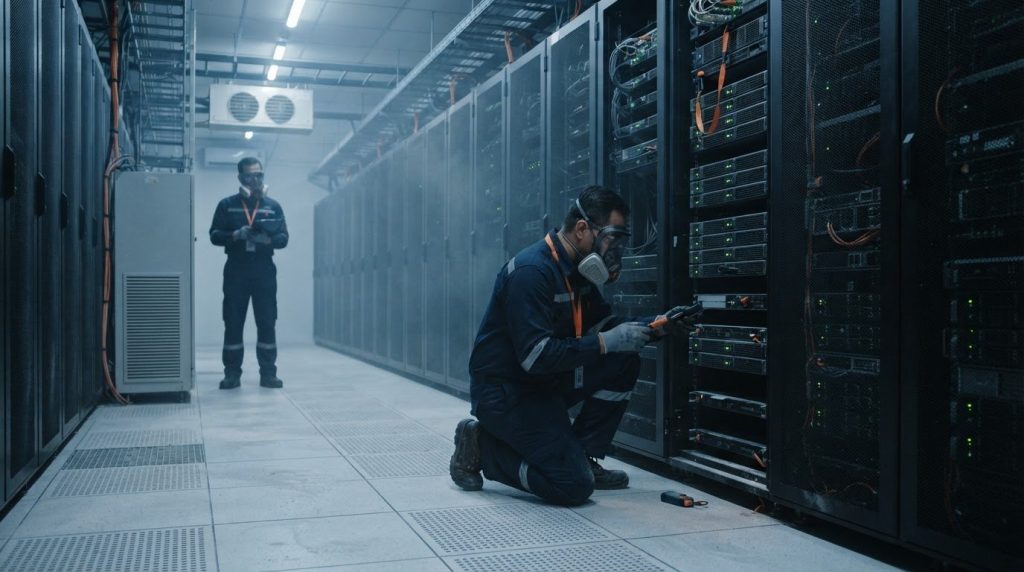
A fire suppression discharge doesn’t leave one universal cleanup task: dry and wet chemical agents can leave residues that need prompt removal, while clean-agent systems generally leave no residue. Even after a clean-agent release, the affected space may need ventilation and the system needs inspection. For cleaning after fire suppression system discharge, keep people out until the environment is declared safe and follow the agent manufacturer’s cleanup instructions.
It’s understandable to expect a clean-agent system to leave little behind, or to assume visible powder or foam is the only concern. But residue, smoke, moisture, and the discharge itself can affect equipment and air quality. Don’t restart affected equipment simply because flames are no longer visible.
This guide explains how to respond safely, what cleanup involves for different agent types, and which conditions can extend the work. It also covers what to document for an insurance claim and when to coordinate cleanup with fire-protection contractors, particularly in data centers where contamination can affect racks, equipment, and airflow paths.
Key Takeaways
- Identify the discharged agent before selecting a cleanup method; residues and post-discharge conditions vary by system type.
- Keep people out until the area is declared safe, and follow the agent manufacturer’s instructions before handling residue.
- Document the affected area, suppression hardware and incident details to support insurance reporting and restoration records.
- Allow wet surfaces to cool before cleaning, then rinse and dry them thoroughly to limit lingering moisture and contamination.
- Coordinate cleanup with fire protection contractors, and have the suppression system inspected and restored before relying on it again.
What happens to fire suppression agents after discharge?
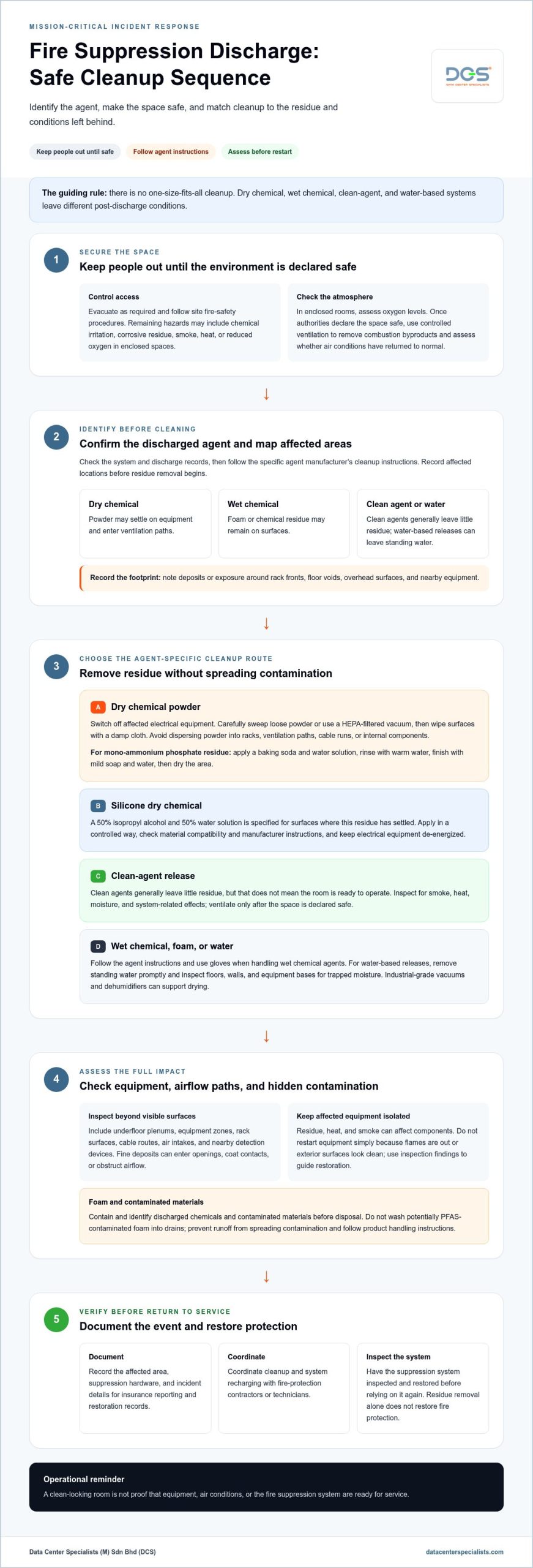
Identify the discharged agent before choosing a cleanup method. Dry chemical, wet chemical, and clean agents create different post-discharge conditions, so follow the manufacturer’s instructions for the specific system.
After activation, evacuate as required and keep people out until the environment is declared safe. In enclosed rooms such as server spaces, assess oxygen levels and use controlled ventilation to remove combustion byproducts before re-entry.
In Malaysia, follow the system manufacturer’s instructions and site fire-safety procedures for cleanup, and coordinate recharging with fire-protection technicians. The required steps depend on the agent and system. Residue removal does not restore the system’s fire protection.
Remaining hazards can include chemical irritation, corrosive residue, smoke, heat, and reduced oxygen in enclosed spaces. Don’t restart affected equipment until the space and equipment have been assessed.
Contain and identify discharged chemicals and contaminated materials before disposal. Don’t wash potentially PFAS-contaminated foam into drains. Prevent runoff from spreading contamination and follow the product’s handling instructions.
-
Clean After a Fire Suppression System Discharge: Dry Chemical Powder
Switch off affected electrical equipment before removing dry chemical powder. Carefully sweep up loose residue or use a HEPA-filtered vacuum, then wipe surfaces with a damp cloth. For mono-ammonium phosphate residue, apply a baking soda and water solution, then rinse with warm water. Avoid dispersing powder into racks, ventilation paths, cable runs, or internal components. Finish with mild soap and water, then dry the area.
-
Remove Chemical Residue and Ventilate
Remove chemical residue promptly, following the specific agent manufacturer’s instructions. Residues can contaminate surfaces and contribute to corrosion, while lingering agents or smoke may affect the room after discharge. Once authorities declare the space safe, ventilate it thoroughly and assess whether air conditions have returned to normal. In enclosed data center areas, include underfloor plenums, equipment zones, and airflow paths in the assessment, rather than ventilating only the visible room.
-
Clean Silicone Dry Chemical Residue
Apply a solution of 50% isopropyl alcohol and 50% water to surfaces where silicone dry chemical has settled. Use a controlled application to avoid spreading residue into nearby equipment, openings, or cable runs. Check the affected materials and manufacturer instructions before applying liquid, particularly around sensitive equipment. Remove loosened residue with suitable wiping materials, and keep electrical equipment de-energized during cleanup.
-
Review Safety, Regulations, and Disposal
Wear gloves when handling wet chemical agents because contact can irritate skin; wash exposed skin thoroughly with water. For kitchen systems, shut off fuel, confirm there are no open leaks, and de-energize the hood and exhaust before cleanup. Let cooking surfaces cool to room temperature, then remove foam completely with hot water, soapy water, or a clean cloth. The Ansul R-102 owner’s manual says its alkaline wet chemical agent should be cleaned from kitchen surfaces within 24 hours. In data centers, professional data center cleaning can address residue across equipment areas and contamination pathways.
Clean-agent residue and post-discharge conditions
Identify the discharged system and inspect the protected space before choosing a recovery method. Clean agents generally leave little residue, but smoke, heat, moisture, and system components still need attention.
-
Identify Residue from Different Agent Types
Compare visible deposits with the system’s agent and discharge records before cleaning. The National Fire Protection Association defines a clean agent as an electrically non-conducting, volatile, or gaseous fire extinguishant that leaves no residue upon evaporation. FM-200™ (HFC-227ea) and FK-5-1-12 are examples. Minimal residue does not mean the room is ready for operation.
Check for powder, foam, water, smoke deposits, and residue on nearby surfaces. Dry chemical agents can leave deposits on equipment and inside ventilation paths. Wet chemical agents may leave foam on surfaces, while water-based systems can leave standing water. Before removal begins, record affected locations, including rack fronts, floor voids, and overhead areas.
-
Assess Residue Effects on Electronics
Keep affected electrical and electronic components isolated until they’ve been assessed. Fine deposits may enter openings, coat contacts, obstruct airflow, or remain inside equipment even after exterior surfaces look clean. Chemical residue can contribute to corrosion, while heat and smoke may affect components independently of the extinguishing agent.
Inspect rack surfaces, cable routes, air intakes, and nearby detection devices for deposits or signs of exposure. PFAS deposits warrant particular attention: ongoing chemical interaction can lead to equipment failure weeks or months after an event. Don’t restart equipment based only on the absence of visible residue. Use inspection findings to guide restoration.
-
Extract Water and Remove Residue
After a water-based release, promptly remove standing water, then inspect floors, walls, and equipment bases for trapped moisture. Industrial-grade vacuums and dehumidifiers can support drying in affected areas. Check raised floors and underfloor plenums, where water or contaminants can collect beyond the visible room.
Choose a removal method suited to the agent and surface. Don’t apply water or cleaning chemicals to sensitive electronics without a compatible procedure. After removing residue, inspect ventilation paths, cable runs, and component surfaces for remaining deposits, then document the condition before equipment restoration.
After a clean-agent release, coordinate ventilation to restore normal room air conditions, and arrange inspection of sensors and nozzles for jamming or misalignment. For contamination affecting racks, raised floors, or underfloor spaces, professional data center cleaning can address affected physical areas using mission-critical cleaning methods.
Cleanup timelines and insurance coverage
Plan the cleanup sequence around immediate safety controls, damage documentation, and the work required to restore normal operations. A small, contained release calls for a different response from an incident affecting equipment, building finishes, or multiple data center areas.
- Record the incident before moving affected materials. Photograph the discharge area, suppression hardware, visible residue, water damage, and equipment condition. Add the event timeline, incident report, witness accounts, and an initial damage assessment to the claim file. These records help explain what happened and which areas required work. Keep copies of system event logs and restoration records with the same incident documentation.
- Notify the insurer promptly and review the property policy’s terms. Coverage for damage from fire suppression systems depends on the policy wording and documented damage. Describe the discharge agent, affected rooms, equipment, and immediate actions taken. In Malaysia, keep the insurer’s claim reference and communications with photographs, repair details, and assessment records.
- Estimate the timeline by separating cleanup from restoration and system servicing. Chemical or powder cleanup can take hours or days. Minor discharge cleanup may take a few days, while larger incidents involving chemical or water damage may take a week or more. The amount of residue, affected surfaces, water penetration, equipment inspection, and ventilation work all influence the sequence. A surface wipe alone does not establish that racks, cable routes, or floor voids are ready.
- Set documented clearance points before returning affected areas to normal operation. Confirm that residue removal, drying, inspections, and required repairs are complete. After water exposure, remove standing water promptly, as moisture left behind can create additional restoration work. Record replaced components, repairs, test results, and the return-to-service date. These details support the insurance file and future facility safety reviews.
If a data center release affects only part of the facility, plan the work by zone. For example, document the affected room separately from adjacent operational spaces, and note whether underfloor areas or equipment intakes need inspection. This creates a clearer cleanup scope and helps operations teams track which areas remain unavailable.
Keep industrial drying and residue removal within a controlled restoration plan. The sequence should account for the discharged agent, affected materials, equipment exposure, and evidence required by the insurer. Where water or agent discharge causes secondary property damage requiring disposal of unsalvageable furnishings or building materials, specialized cleanout providers like dljpropertysolutions.com can assist in clearing debris from commercial spaces. Don’t declare the site ready just because visible deposits have disappeared. Inspection findings and restoration records should support that decision.
Cooling, rinsing and drying surfaces
Begin only after the affected area has cooled and the fire is confirmed extinguished. The method depends on whether the release involved water, wet chemical foam, or another suppression agent.
- Assess heat and surface condition before touching affected materials. Allow surfaces exposed to fire or hot discharge to cool before cleanup. Check nearby equipment, floor finishes, and walls for heat or visible damage. In a data center, keep exposed electrical equipment out of service during assessment. A dry-looking rack exterior does not establish that internal components are safe to restart.
- Promptly remove standing water from sprinkler discharge. Sprinkler systems can release thousands of gallons of water, flooding floors, walls, and ceilings. Water may also collect beneath raised access floors or around equipment bases. Include these concealed areas in the assessment instead of focusing only on visible puddles. Industrial-grade vacuums and dehumidifiers can support water extraction and drying across affected spaces.
- Rinse wet chemical foam only after affected cooking surfaces have cooled. Remove the foam, rinse the surface with water, and allow it to dry before reuse. Check adjoining surfaces for remaining agent, since residue can extend beyond the initial discharge area. Avoid directing rinse water toward electrical equipment, floor openings, or other areas where it could create additional exposure.
- Dry each affected surface thoroughly before restoring normal use. Moisture left after a discharge can contribute to mold growth within 24-48 hours. Inspect flooring, wall edges, ceiling areas, and spaces beneath raised floors for trapped water. A surface that feels dry may still need assessment in concealed areas. Record damp locations and drying progress so restoration teams can track areas requiring further attention.
- Make sure the cleanup method matches the suppression agent and surface. Don’t use a general rinse on sensitive electrical equipment or apply cleaning liquids without a compatible procedure. After drying, check nearby cable routes and airflow openings for visible residue. Keep equipment isolated until its condition has been assessed. Extinguishing the fire does not eliminate risks from heat, water, or residue.
After discharge, promptly remove dry chemical powder from surfaces, internal components, ventilation paths, and cable runs. Clean wet chemical residue only after cooking surfaces have cooled to room temperature.
Coordination with fire protection contractors
Hire a professional fire-damage cleanup team when chemical residue, water, smoke, or equipment exposure extends beyond a readily accessible surface. In a data center, contamination inside racks, under raised floors, or along cable runs calls for controlled assessment and cleaning.
In Malaysia, coordinate inspection, servicing, recharging, and resetting with a fire-protection contractor familiar with the installed system. Follow manufacturer instructions and site procedures. Don’t return the system to service based only on refilled cylinders.
- Share discharge details before restoration begins. Give the fire-protection contractor the system type, agent, incident timeline, fire-panel event log, and any known detection or manual activation sequence. Identify whether heat, smoke, water, or chemical residue reached nearby equipment. This information helps distinguish a genuine fire event from a possible mechanical fault or accidental release.
- Keep the discharged system out of service until it has been inspected and restored. Post-discharge servicing may include checking agent-container pressure and valves, replacing expellant cartridges, and refilling or replacing cylinders. Recharging restores the extinguishing agent, but does not automatically restore every detection, release, or control function.
- Require functional checks before relying on the system again. A qualified technician should verify detection loops, abort switches, and solenoid release valves, then confirm the system’s control functions. For clean-agent systems, inspection can include sensors and nozzles for jamming or misalignment. Testing should verify operation without triggering an unintended discharge.
- Coordinate the cleanup boundary with the fire-protection contractor and facility operations team. Mark rooms and equipment zones where chemical residue or water remains, including concealed areas beneath raised floors. Align restoration with equipment inspection, ventilation, and system recommissioning. Don’t assume another available fire-protection system automatically replaces the discharged one.
- Document completed work before normal operations resume. Record repairs, replaced components, recharge information, test results, and the return-to-service date. Compare the restored system configuration with the protected hazard, especially if room layouts, machinery, or appliances have changed. Those changes can affect whether the existing suppression arrangement still protects the space appropriately.
For data center operators, specialist physical cleaning can address contamination beyond visible surfaces, including equipment areas and raised-floor spaces. Coordinate the scope with fire-protection servicing so residue removal and system restoration proceed in a controlled sequence. Arrange professional data center cleaning for affected mission-critical areas.
Data Center Specialists (M) Sdn Bhd (DCS): Professional Data Center ISO Cleaning Services
Data Center Specialists (M) Sdn Bhd (DCS) provides Professional Data Center ISO Cleaning Services for facilities requiring physical contamination control after a discharge. Engage DCS when residue, smoke particles, or moisture may have affected equipment areas, racks, raised floors, or underfloor plenums.
Cleanup in a mission-critical environment involves more than removing visible deposits. The scope should account for contamination pathways, sensitive equipment, airflow openings, and operational boundaries. Coordinate cleaning with the fire-protection contractor’s inspection and system restoration. Cleaning does not replace suppression-system servicing or equipment assessment.
DCS can discuss a cleaning scope suited to the affected data center areas and operating conditions. Contact Data Center Specialists (M) Sdn Bhd (DCS) to discuss your facility’s requirements, or visit datacenterspecialists.com.
Plan the next step toward operational readiness
Use the incident to strengthen coordination between facilities, operations, and fire-protection teams. Assign responsibility for documenting affected zones, approving cleaning methods, and confirming equipment readiness. A shared restoration record can help teams apply lessons from the event to future response planning.
For data center operators, cleaning after a fire suppression system discharge should be scoped to the facility’s contamination risks and operational requirements. Define work boundaries, access controls, and coordination with equipment assessments. Data Center Specialists (M) Sdn Bhd (DCS) offers Professional Data Center ISO Cleaning Services, Data Center Energy Assessment, and Testing, Adjusting & Balancing (TAB) for relevant facility needs.
Discuss affected areas and restoration priorities with DCS to identify an appropriate next step. Contact Data Center Specialists (M) Sdn Bhd (DCS) to continue the conversation and support a controlled return to operations.
Frequently Asked Questions
What cleanup is required after a fire suppression system activates?
The required cleanup depends on the discharged agent and the materials it reached. Clean agents generally leave little residue, while powder, foam, or sprinkler water can require physical removal and drying. In a data center, include concealed locations such as cable routes, equipment intakes, and floor voids in the assessment. Keep separate records for residue removal, equipment inspection, and suppression-system restoration, since each involves different work.
What should you do immediately after a fire suppression system discharges?
Evacuate according to the site emergency plan and contact emergency services, even if the fire appears contained. Don’t re-enter until a qualified authority declares the area safe. Check for injuries and arrange first aid or emergency medical care when needed. Isolate power only when it’s safe to do so. In a data center, preserve the fire-panel event log and restrict access to affected rooms.
How do you clean residue from a fire extinguisher or suppression system?
Identify the agent from the extinguisher label or system records before choosing a cleaning method. Different chemical agents may require different procedures, so don’t mix residues or use a general-purpose liquid on an unknown deposit. For example, dry powder on a rack exterior needs a different approach from wet chemical foam on a kitchen surface. Protect nearby electrical openings and contain collected residue during removal.
How do you clean up after a clean agent or CO2 system discharge?
After the all-clear, ventilate the protected room and assess its air conditions before re-entry. Clean agents generally leave no residue upon evaporation, but smoke, heat, or combustion byproducts may remain. CO2 and other gaseous releases also require attention to oxygen conditions in enclosed spaces. Have trained personnel inspect system components, including sensors and nozzles, and arrange required servicing before relying on the system again.
Can discharged fire suppression residue damage electronics, machinery, or surfaces?
Yes. Chemical deposits can contaminate components and contribute to corrosion, while powder can obstruct equipment openings or ventilation paths. Water can affect electrical equipment and building materials. PFAS deposits may also interact with equipment over time, and failures may appear weeks or months after exposure. Don’t restore power based only on a clean exterior. Assess internal exposure and nearby surfaces before returning equipment to operation.
How do you dispose of fire suppression chemicals and contaminated materials in Malaysia?
Contain and identify discharged chemicals and contaminated materials before disposal, and follow the product’s handling instructions. Don’t wash potentially PFAS-contaminated foam into drains or allow runoff to spread contamination.